
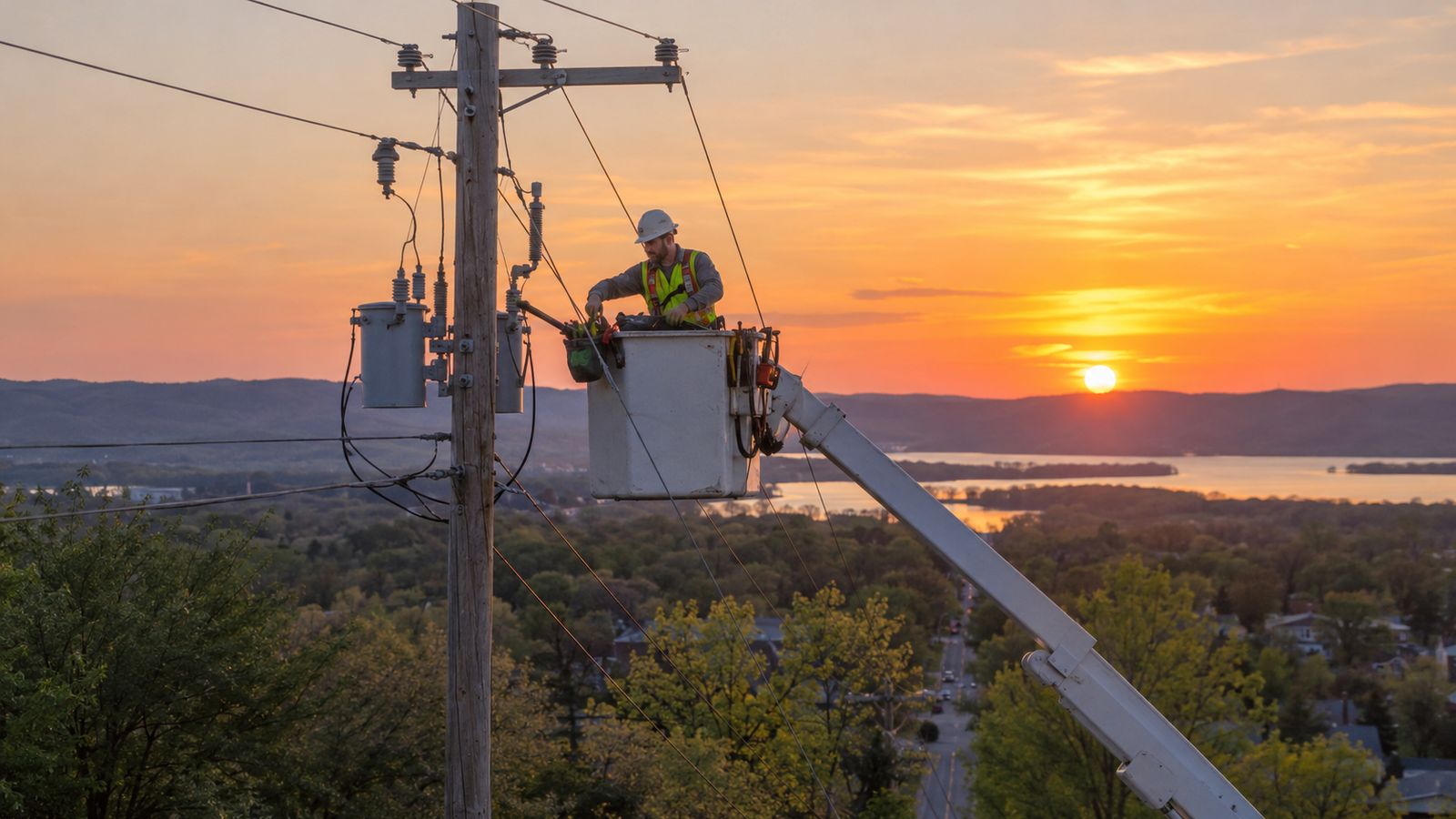
How to become a lineman
Want to become a lineman? Start here. Step one doesn't involve a pole, we promise.
Checked 2026-10-20
The lineman path in short
- Most linemen start with a high school diploma or the equivalent. Then they learn on the job over several years.2
- Apprenticeships are common, and employers may like to see basic algebra and trigonometry.2
- A school program is a second way in.2
- After 3 or 4 years, a good apprentice reaches journey level.2
The path, step by step
- 1
Finish school
A diploma or the equivalent is where most people begin.
- 2
Apply to a program
Read each program's entry rules before you apply.
- 3
Learn while you earn
An apprenticeship mixes paid work with classroom time.
- 4
Reach journey level
Then you do most jobs without someone watching.
Finish a step, tap Mark done, and the crew climbs a notch.
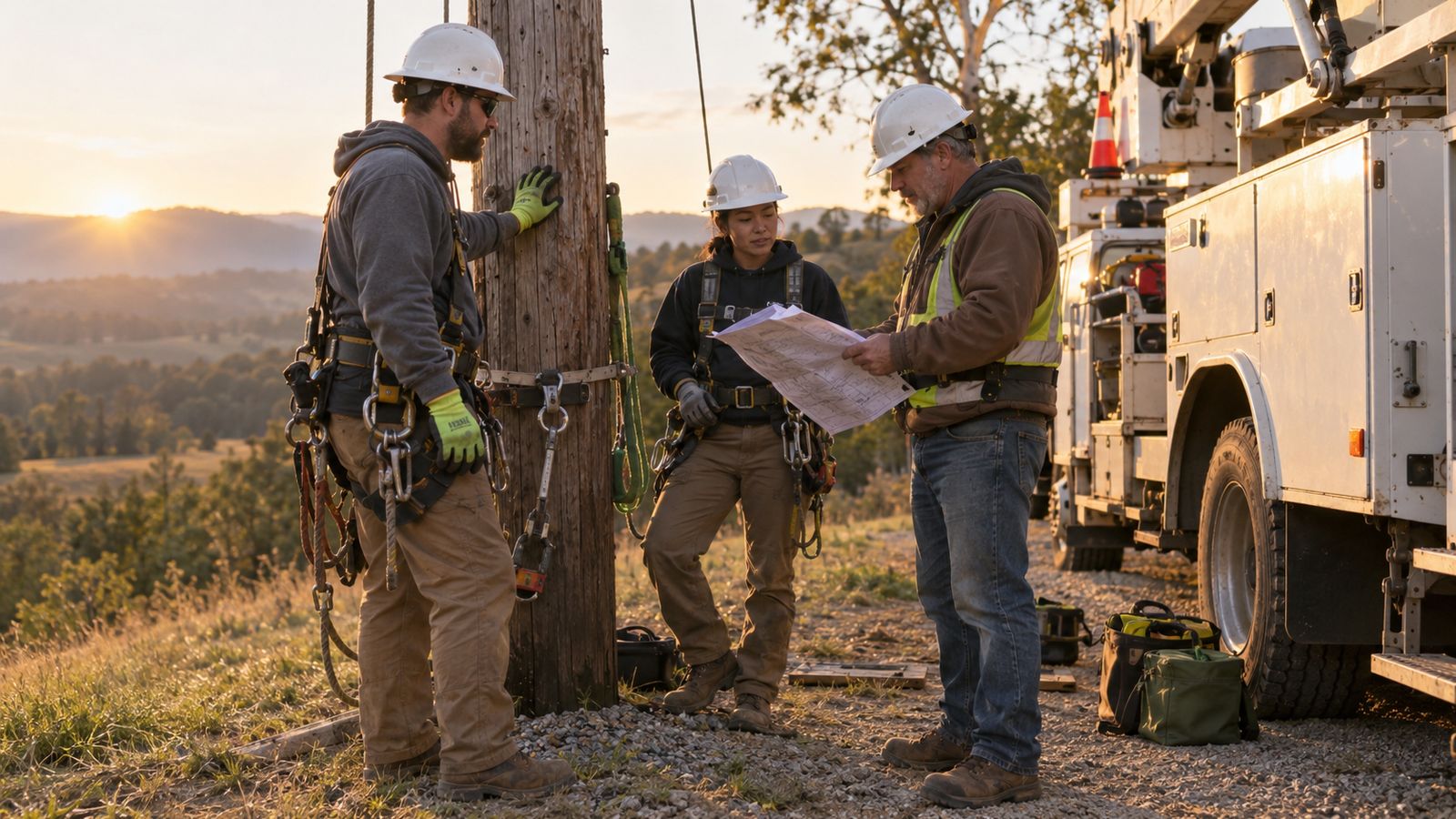
What the job market looks like
Guess first, then check. Close counts.
- $95,320 median pay a year for power-line installers. A national median for the whole group, not what a first-year apprentice earns, and not a promise.1 We lay out the route so you can plan for it.
- 10 percent projected job growth, from 2025 to 2035.1 We keep the steps current so you can plan ahead.
- 13,600 new positions projected over the same years.1 We point you to the rules to read before you apply.
Two routes in
It mixes paid work with classroom time. It may last up to 3 years.2
Some are run by an employer and a union together.2
Entry often asks for a diploma or equivalent, a year of algebra, a passing aptitude test score and a drug screen. Some also ask for a fitness test.2
One employer example asks for a diploma or GED, a valid driver's license and a passing score on the Electrical Training Alliance Aptitude Test. It posts openings only when it has them. Employers and training programs near you will have their own rules.3
What programs often ask for
 A diploma or equivalentWhere most linemen start.2
 A commercial driver's licenseUsually needed if you drive heavy trucks. Age and medical rules differ by state, so check yours.2
 A passing aptitude scoreEntry often asks for a passing score on an aptitude test.2
 A fitness test, sometimesSome programs ask for one.2
Common questions
Do I need a license to be a lineman?
A trade certification is available but not required. Check your state and employer.2
Do I need a college degree?
Most linemen start with a high school diploma or the equivalent, not a degree.2
How much will I earn?
Pay depends on the employer, the state and where you are in training. Read each employer's posted pay before you apply.
How long does an apprenticeship last?
Each program sets its own length. Ask the one you want to join.
More to read
 ToolsFree tools and chartsCharts and calculators for people in the trades.
Checked 2026-10-20. Next recheck by 2027-04-20.
Sources
- U.S. Bureau of Labor Statistics, Occupational Outlook Handbook, Electrical Power-Line Installers and Repairers, pay and job outlook (national figures, May 2025 and 2025 to 2035). https://www.bls.gov/ooh/installation-maintenance-and-repair/line-installers-and-repairers.htm
- U.S. Bureau of Labor Statistics, Electrical Power-Line Installers and Repairers, How to Become One (education, training, licenses, advancement). https://www.bls.gov/ooh/installation-maintenance-and-repair/line-installers-and-repairers.htm#tab-4
- Tennessee Valley Authority, Lineman Apprentice Program (one employer, shown as an example of one route). https://www.tva.com/careers/lineman-apprentice-program